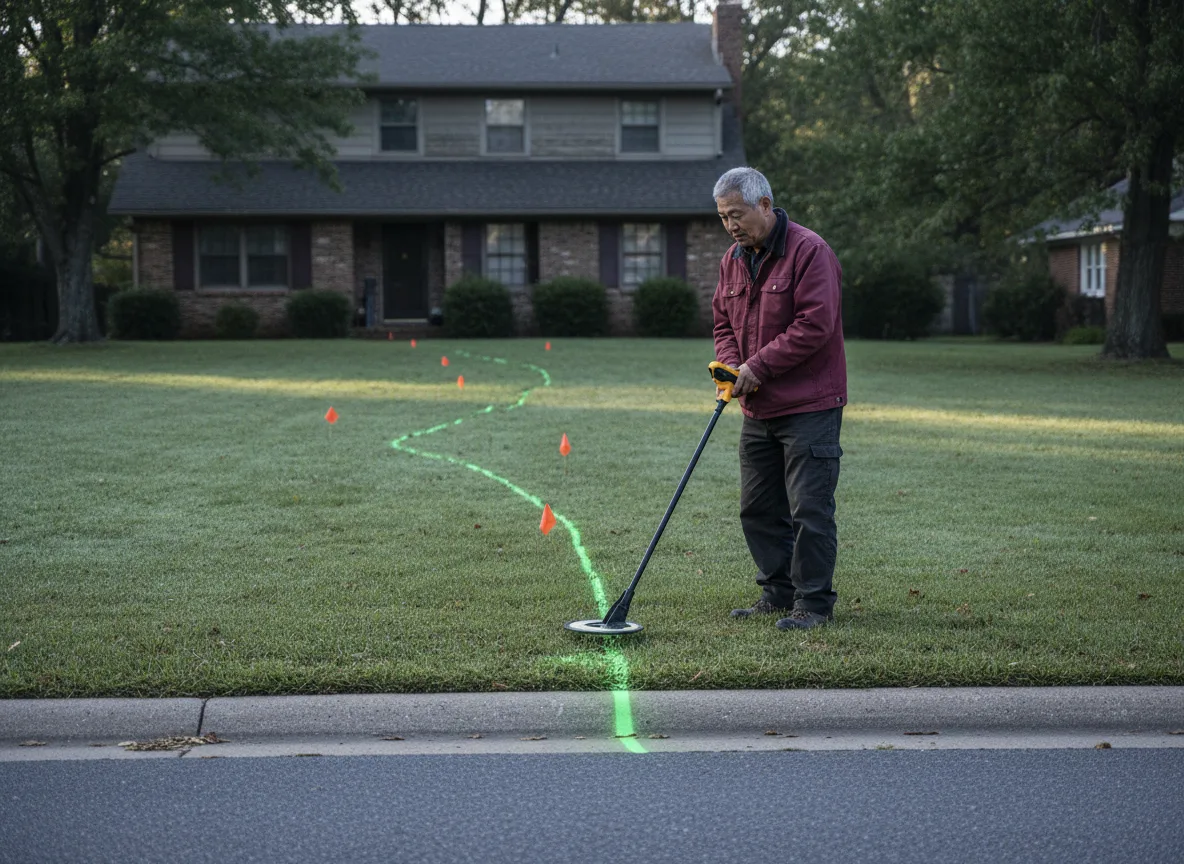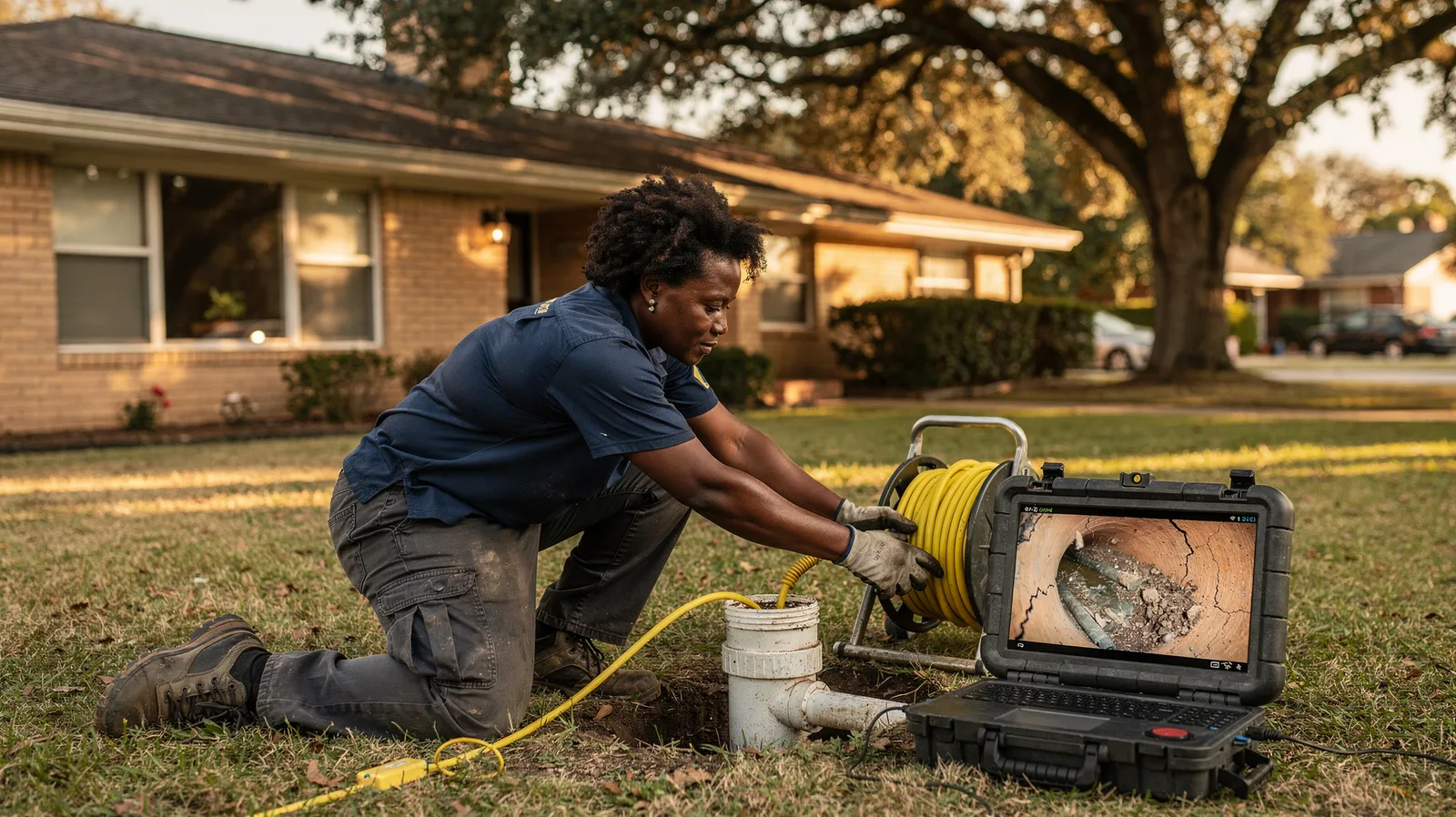
Homes on septic still have a sewer line. It runs from the house to the tank, and on many systems more pipe carries effluent from the tank to the drain field. A camera inspection of these lines checks the parts of a septic system that a routine tank pumping does not reach.
What the camera looks for
- Roots at joints between the house and the tank
- Sags where the line has settled into soft backfill
- Breaks near the tank inlet, a common spot for settling damage
- A missing or broken inlet baffle, visible where the line enters the tank
- Crushed or blocked distribution pipes, where the system design lets the camera in
Buying a home on septic
Some states and counties require a septic inspection when a property changes hands, and lenders sometimes ask for one. Those inspections usually focus on the tank and the field. Adding a camera run on the house-to-tank line covers the pipe in between. Ask what the required inspection in Java, SD includes so the two visits do not overlap.
Upkeep that protects the line
The EPA notes that household septic tanks are typically pumped every three to five years. Keep vehicles off the line and the field, and do not plant trees near either. Garbage disposals and wipes add solids that settle in low spots, so a line with a sag fills faster in homes that use them.