A sewer line rarely fails all at once. Roots thicken a little each season, a belly collects a little more debris, and a crack widens slowly. An annual sewer inspection records the line at regular intervals so you can see those changes before they turn into a backup.
Who gets the most from a yearly scope
- Owners of homes with clay, cast iron or Orangeburg laterals
- Properties with large trees near the sewer route
- Lines that have needed clearing more than once
- Rental owners who want a record of the line between tenants
- Anyone who chose to monitor a defect rather than repair it right away
How the comparison works
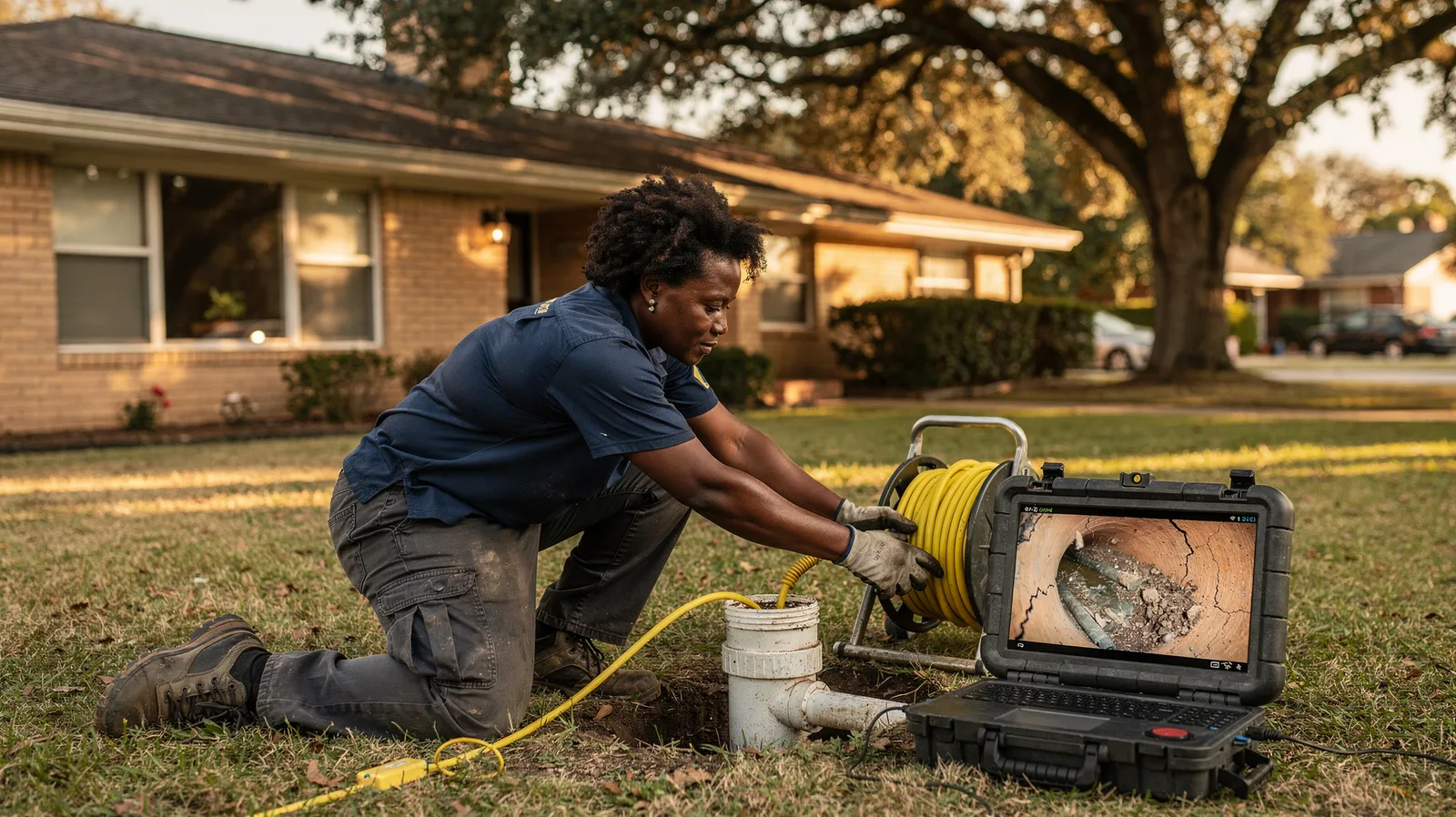
Each visit records the line from the same access point, so footage distances match from year to year. Putting last year's video beside this year's at the same distance shows whether roots at a joint have grown, whether standing water in a belly is deeper, or whether a crack has opened. That comparison turns a single snapshot into a trend.
What to do with the results
If nothing has changed, the scope simply confirms the line is stable. If a defect is getting worse, you have time to collect bids and plan the work instead of calling for help during a backup. Keep every year's file together; for owners in Java, SD, that set of videos is also useful to hand a buyer when the house is sold.