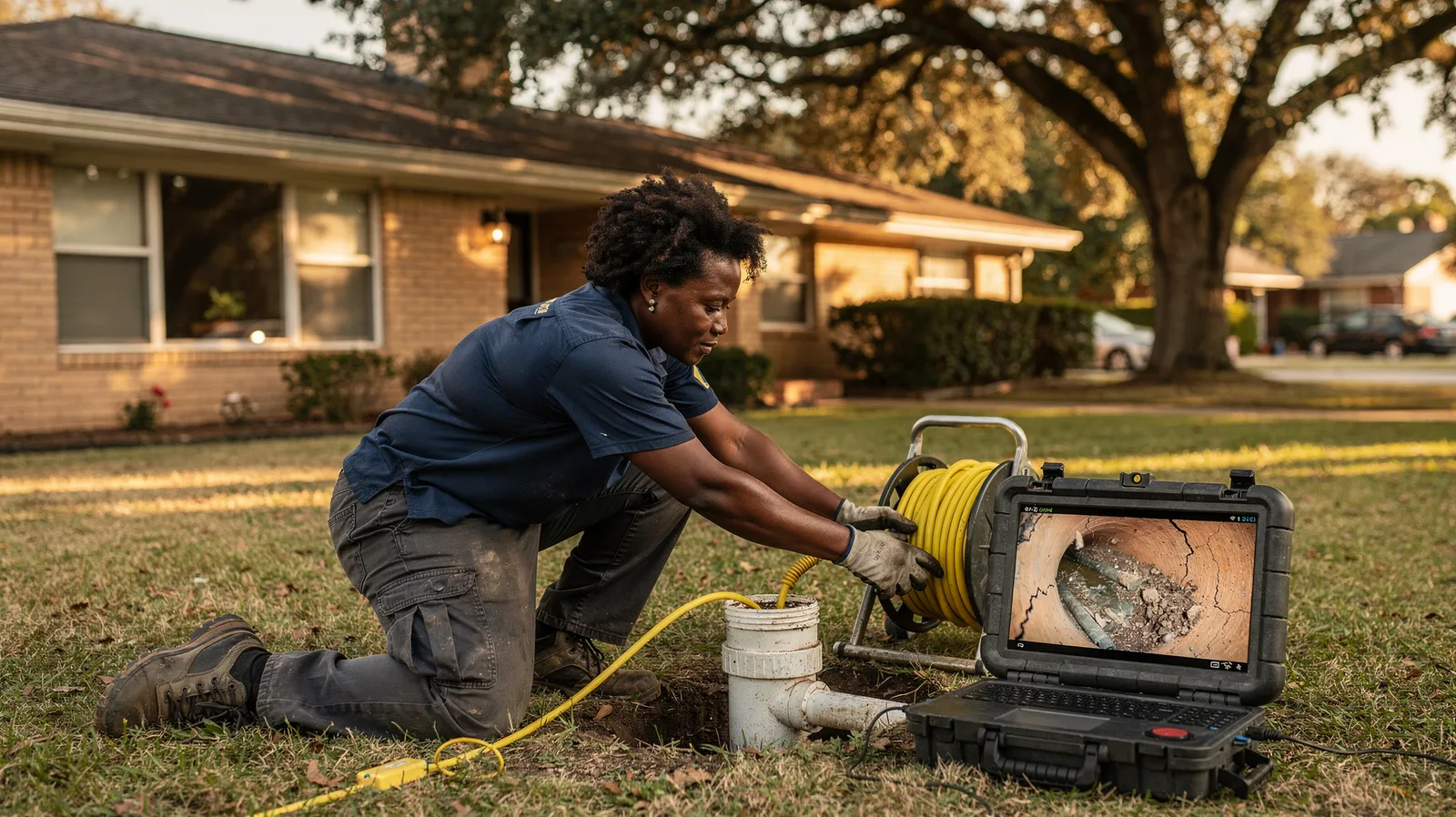
After a sewer backup or a sudden drain failure, an insurance adjuster will want to know what happened and where. A recorded sewer inspection gives you footage that shows the condition of the line, the location of the blockage or break, and what the pipe is made of.
What the footage can document
- A collapse, break or separated joint and its distance from the access point
- A blockage, and whether it sits in your lateral or near the public main
- Roots, sags and long-term wear that point to gradual deterioration
- The pipe material along the run
Know what your policy covers
Standard homeowners policies often exclude sewer backup unless a water backup endorsement has been added, and many policies treat wear, tree roots and gradual deterioration differently from sudden damage. Read your policy or ask your agent before the inspection so you know which questions matter. The camera records what is there; it does not decide coverage.
Practical steps
Photograph the damage inside the house before cleanup when it is safe to do so. Keep the recorded video and the written log, note the date, and send copies to your adjuster. If your insurer sends its own inspector, share the existing footage so both sides look at the same distances. For a property in Java, SD, ask for the file in a common video format an adjuster can open easily.