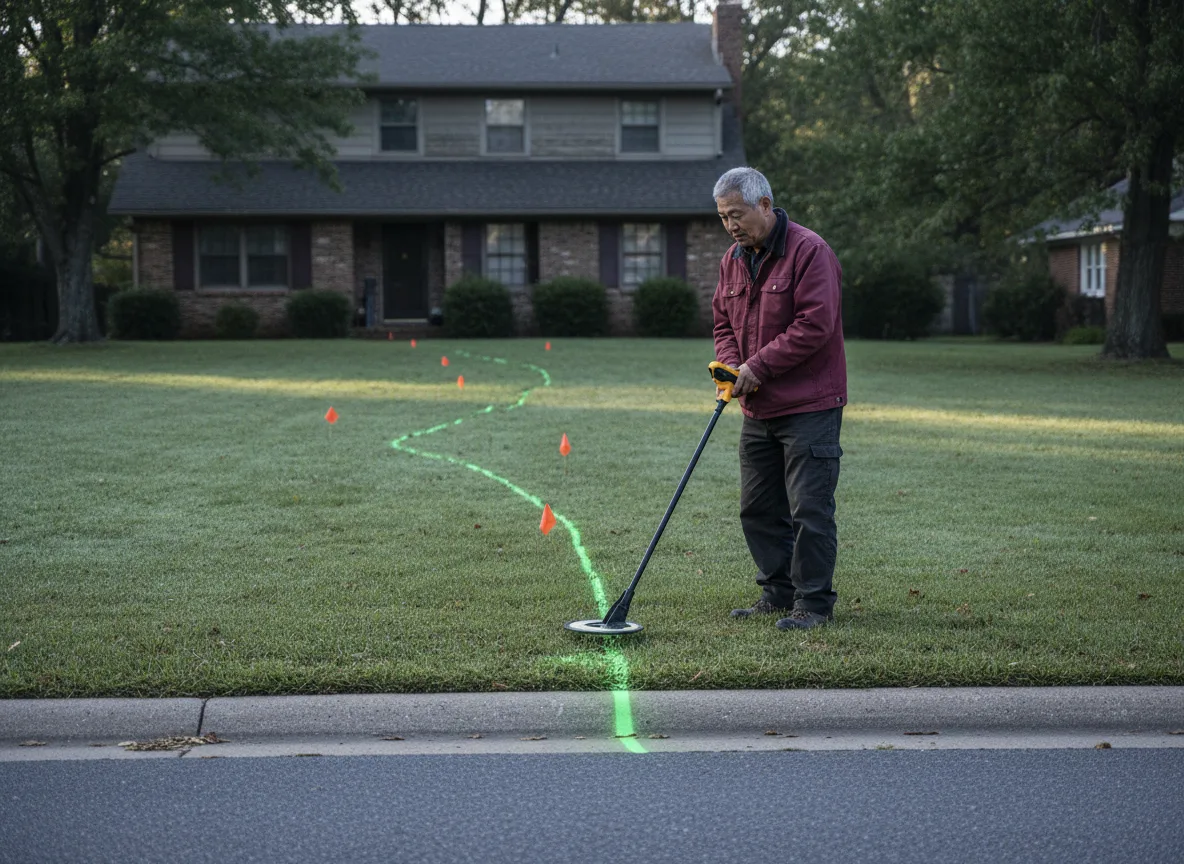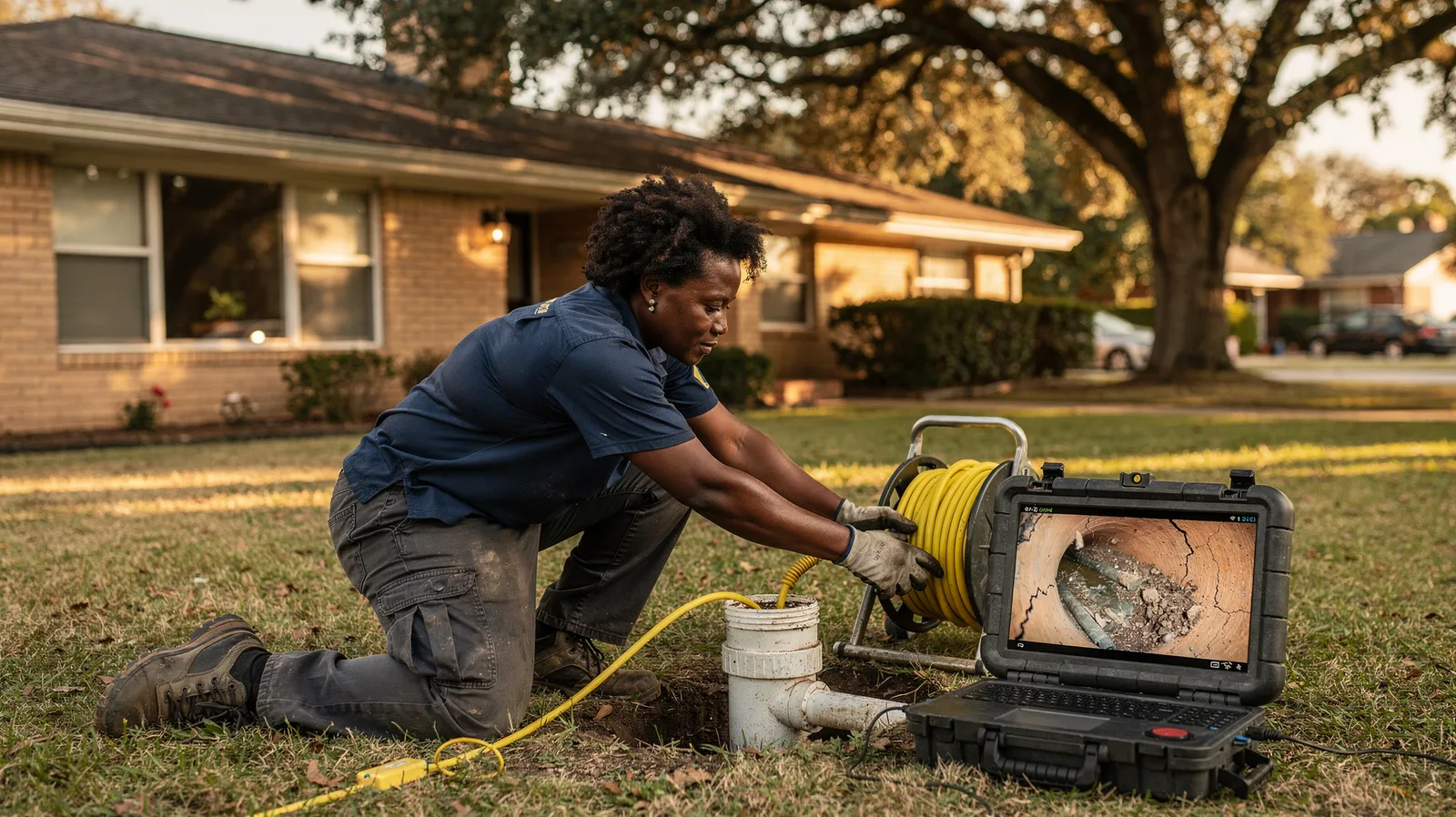
Tree roots do not break into a sound pipe on their own. They follow moisture leaking from joints and cracks, then grow through the gap. Inside, they spread into a fine mat that catches paper and grease until the line slows or stops.
How roots appear on camera
- Hair roots: thin strands at a joint, often the first sign
- Root curtain: a fringe hanging around the full circle of a joint
- Root ball: a dense mass that fills most of the pipe
- Structural damage: a joint pushed apart or a pipe wall split by root growth
The inspection notes the distance to each intrusion, so you can see whether it sits under a particular tree, a hedge or a neighbor's yard.
What the findings usually lead to
Light roots at one or two joints can often be cut or cleared, but they grow back because the opening is still there. Repeated intrusions at the same joint point toward a spot repair or a liner that seals the joints. If roots have broken the pipe, replacing that section is the usual answer. The footage lets you weigh those choices with real distances in hand.
Lowering the risk
Clay pipe laid in short sections has many joints, which is why older homes in Java, SD see more root trouble. When planting, keep thirsty species such as willows and silver maples well away from the sewer route, and consider a follow-up scope a year or two after any root cutting.