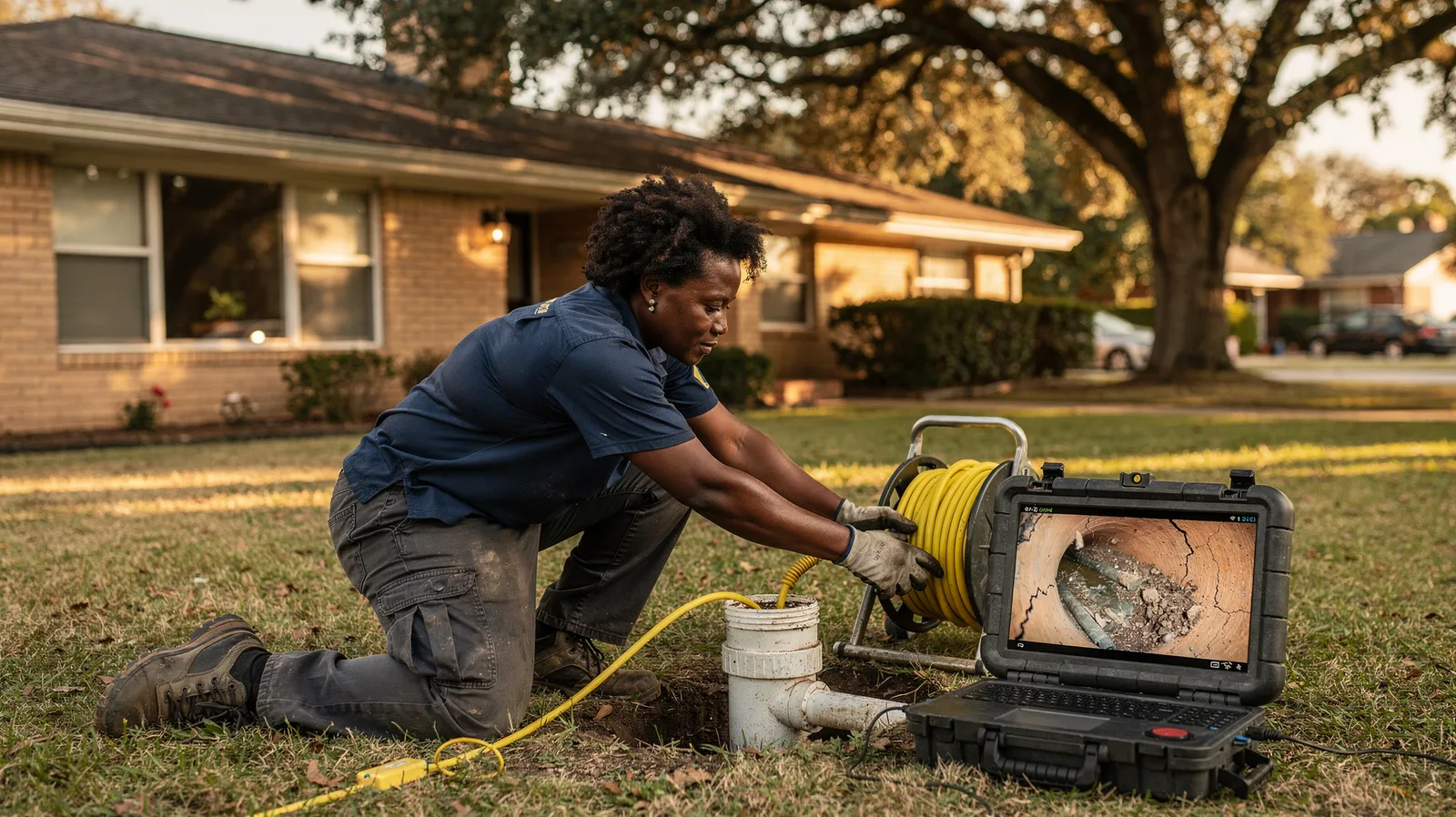
A recorded sewer video is only useful if you can make sense of it later. A good report pairs the footage with a written log so you, a buyer, a seller or a contractor can jump to the exact spot that matters.
What the written log should list
- Property address, date and the access point used
- Pipe diameter and each material found along the run
- Every observation with its footage distance, such as roots at a joint at 34 feet
- Where the camera stopped and why, if it did not reach the main
Reading the common terms
Belly means a section has settled lower than the pipe on either side, so water and solids collect there. Offset means two sections no longer line up; a small offset may just catch debris, while a large one can stop a cable. Cracks range from hairline marks to open fractures with soil visible. Scale and tuberculation describe the rough buildup inside cast iron. Orangeburg is a tar-soaked fiber pipe used widely from the 1940s into the 1970s; on video it often looks blistered or squeezed into an oval.
Keep the file
Store the video with your house papers. If problems show up years later in your Java, SD home, comparing new footage with the old recording shows how fast a defect is changing, and whether it is changing at all.